
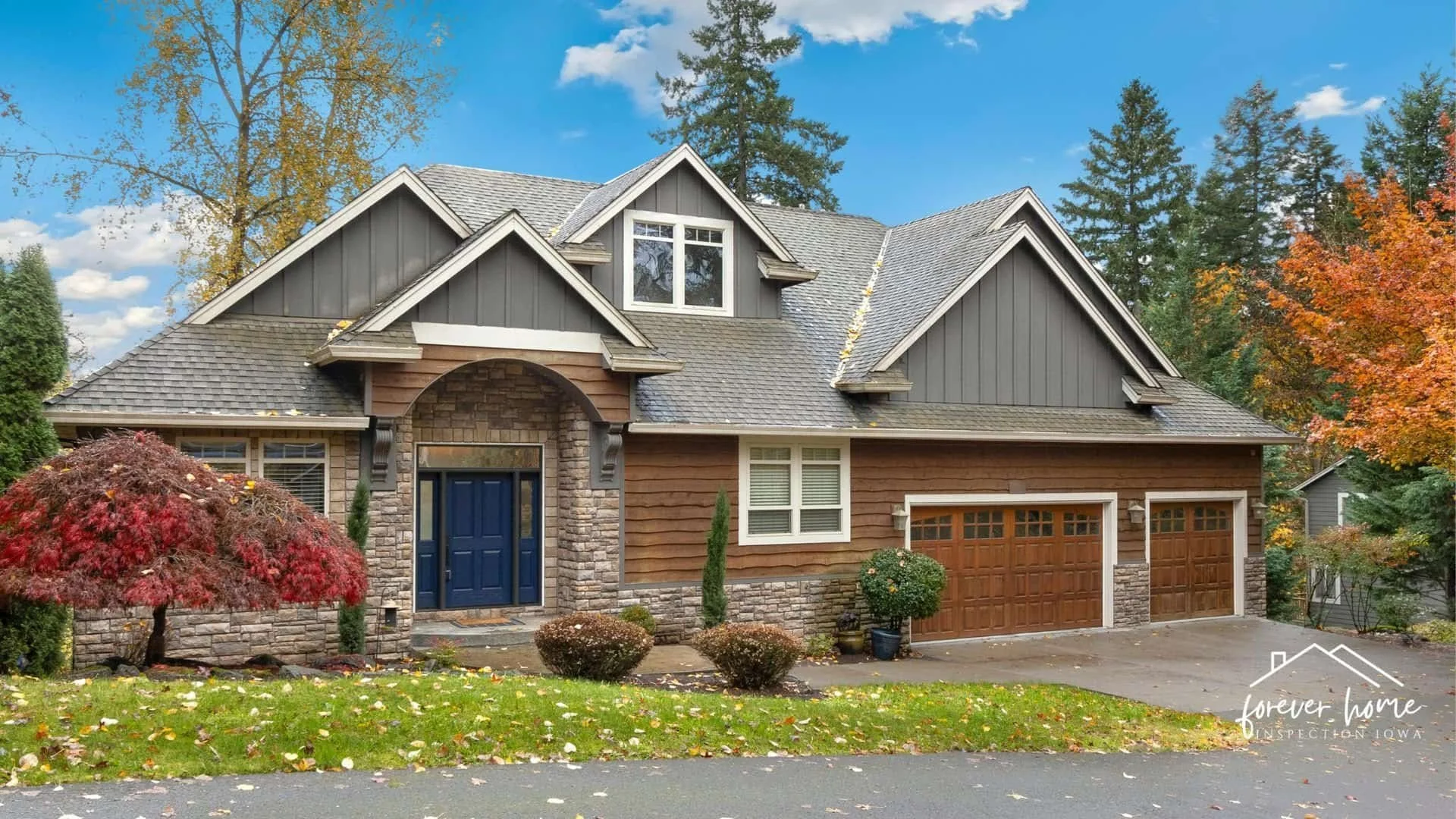
Home inspectors in Johnston, Iowa evaluate residential properties for various clients, from first-time buyers to new-construction owners approaching a warranty deadline. Johnston's growth over the past two decades has produced a housing stock that ranges from brand-new subdivisions to 20- and 30-year-old homes now showing their age. The local geology, climate, and building practices create specific risks that a general out-of-area inspector can miss. This article breaks down what to expect from a Johnston home inspection, what local conditions affect homes in this city, how to choose and schedule an inspector, and what the process costs.
Key Takeaways
Johnston sits on Des Moines Lobe glacial till with heavy clay soils, and 71.6% of Iowa homes exceed the 4.0 pCi/L radon action level. These two factors alone make a locally informed inspection critical for any property transaction.
Certified inspectors in Johnston provide full home inspections, 11-month warranty inspections, radon testing, and sewer scopes, delivering photo-rich digital reports within 24 hours.
Most buyers schedule a home inspection during the purchase contingency period, while new-construction owners in Johnston typically book an 11-month warranty inspection around month 10 to leave time for builder repairs.
Johnston homes built in the late 1990s through mid-2000s are now reaching the end of expected service life for roofing, HVAC equipment, and water heaters; inspectors document these conditions so buyers can plan budgets.
The FAQ section at the end covers pricing ranges, scheduling timelines, radon re-testing, and how long a typical Johnston home inspection takes.
Home Inspections in Johnston, Iowa
A home inspection is a noninvasive visual evaluation of a property's accessible systems and components. Home inspections evaluate accessible systems and components of a property, including structural elements, mechanical equipment, plumbing, electrical wiring, and the building envelope. For buyers, an inspection identifies defects that affect safety, function, or value before closing. For sellers, it removes last-minute surprises that can delay or kill a deal.
Johnston's housing market reflects two distinct eras. Subdivisions built during the city's rapid expansion in the 2000s and 2010s now contain homes that are 10 to 25 years old, with roof shingles, furnaces, and air conditioners approaching or past their rated lifespans. Older acreages closer to the Des Moines River valley have different concerns: aging electrical systems, private wells, septic systems, and drainage challenges tied to local topography.
Inspections in Johnston are performed by certified professional inspectors familiar with Polk County building practices and the area's mix of newer subdivisions and rural properties. A standard inspection covers the roof, exterior cladding, foundation, basement, attic and insulation, electrical panels and outlets, plumbing fixtures and supply lines, HVAC systems, interior finishes, doors, windows, and visible structure.
Reports are delivered as digital, photo-rich documents, typically within 24 hours of the inspection. Home inspector reports should include clear photos and detailed descriptions of findings. Each report provides a room-by-room summary with a prioritized list of concerns, broken into safety items, major defects, and routine maintenance. This information lets buyers negotiate from a position of knowledge and gives sellers a chance to address problems before listing.
Eleven-month warranty inspections deserve special mention for Johnston's many newer homes. These inspections identify issues like settlement cracks, nail pops, grading and drainage deficiencies, and incomplete or improperly installed components. Because most Iowa builders offer a one-year limited warranty, catching these defects before that deadline passes is a matter of timing.
Types of Home Inspections Offered in Johnston
Inspections can include pre-purchase, pre-listing, and maintenance types. Here is a breakdown of the services commonly available in Johnston:
Pre-purchase home inspections: The most common type. Buyers schedule these during the contract contingency period to identify defects before closing.
Pre-listing inspections: Sellers order these before putting a home on the market. The goal is to find and address problems that could slow negotiations or reduce the sale price.
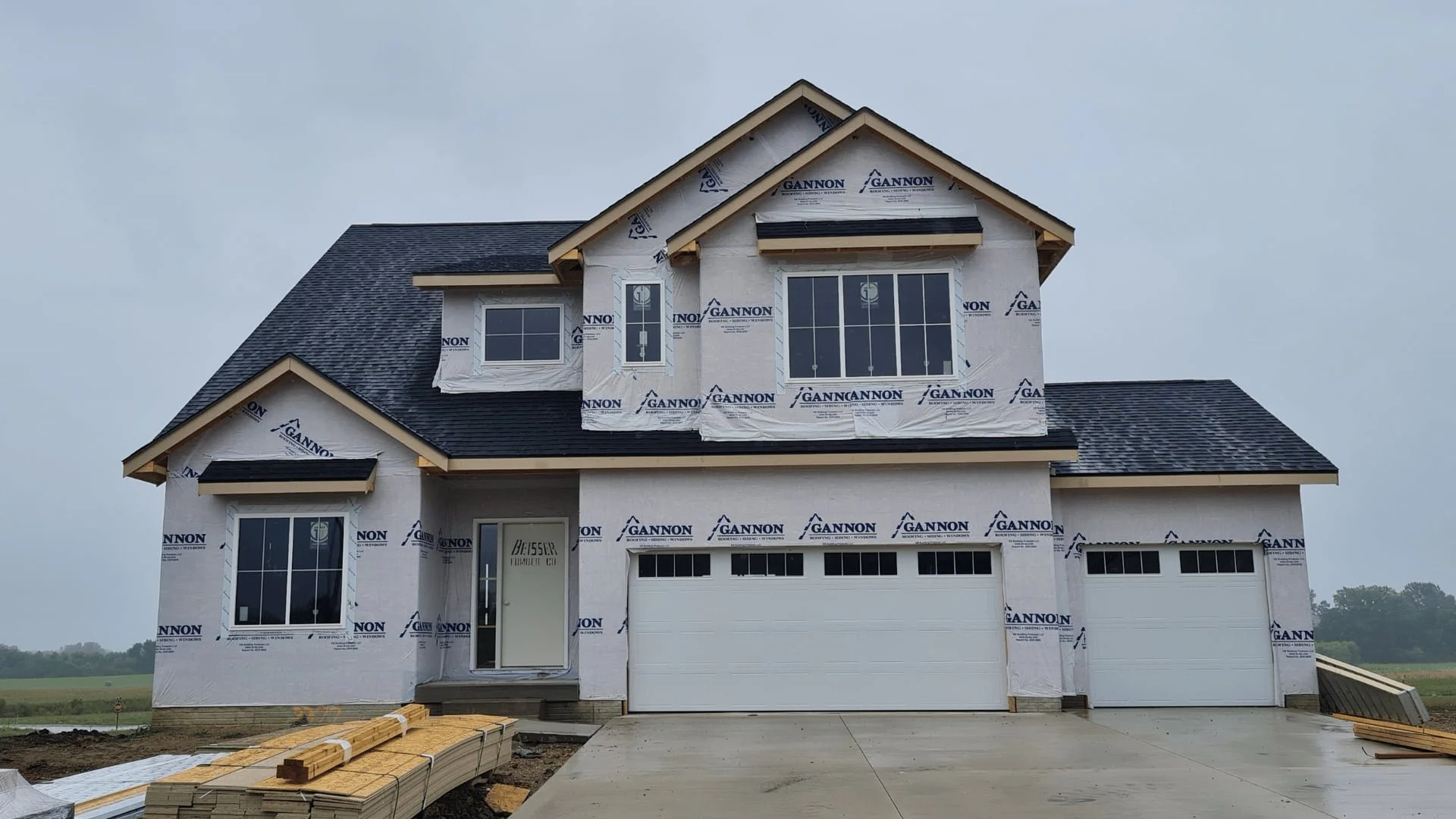
New-construction phase inspections: Inspections for new construction can help guarantee quality building standards during various stages of building, including pre-drywall, pre-closing, and final walk-through.
11-month builder warranty inspections: Scheduled around month 10 or 11, these cover settlement, workmanship, and installation defects while the builder's warranty is still active.
Annual maintenance inspections: Homeowners who want a professional review of their property's condition on a recurring basis.
Specialized inspections may include radon, sewer scope, and fungus assessments. In Johnston, the most frequently requested add-ons are:
Radon testing using 48-hour continuous monitors
Sewer scope camera inspections of the main drain line
Fungus and indoor air quality testing where moisture intrusion is suspected
Separate inspections for outbuildings, detached garages, or pole barns
Multi-family property inspections (duplexes, triplexes, small apartment buildings) are available in the Johnston and greater Des Moines metro area. These include extra attention to common areas, shared utilities, and fire-safety features. Inspectors can coordinate scheduling so that a full home inspection, radon test, and sewer scope all occur in a single visit, which simplifies the timeline for a real-estate purchase contract.
What to Expect During a Johnston Home Inspection
The process starts with booking. Most inspectors offer online scheduling, but you can also call during business hours (for example, Monday through Friday, 8:30 a.m. to 3:30 p.m.) to discuss specific needs. After booking, you receive a confirmation email with the scheduled date, time, and any preparation instructions.
On inspection day, the inspector arrives and works through the property methodically, starting with the exterior (roof, siding, grading, drainage) and moving inside through every accessible room, the attic, basement, and mechanical systems. Most standard single-family home inspections in Johnston take about 1.5 to 3 hours, depending on the home's size, age, and condition. If add-on services like radon testing or a sewer scope are performed at the same visit, add 15 to 30 minutes of setup time.
Clients are encouraged to attend at least the final 30 to 60 minutes of the inspection. This is when the inspector walks through the major findings, points out issues in person, and answers questions. Seeing a foundation crack or a deteriorated roof flashing firsthand is more useful than reading about it later.
A few points worth noting:
Inspectors do not pass or fail a house. They document observed conditions so the client and their agent can make informed decisions and negotiate repairs or credits.
Concrete inspections are not scheduled if temperatures drop below 10°F, because frozen ground and ice cover prevent accurate assessment of flatwork and exposed foundations.
The written report, complete with photos and recommendations, is delivered same-day or next-day in digital format.
Johnston Home Conditions, Local Risks, and Common Inspection Findings
Johnston sits in Polk County on Des Moines Lobe glacial till, a landform deposited 12,000 to 14,000 years ago. The dominant soil types are Clarion, Nicollet, and Webster series: fine-loamy, mixed, and often poorly drained in low-lying areas. These heavy clay soils, combined with central Iowa's 28 to 31 inches of annual precipitation and a freeze-free season of only 145 to 160 days, create predictable patterns of home defects that a good inspector knows to look for. Local drivers for property conditions include high radon levels and unique weather patterns.
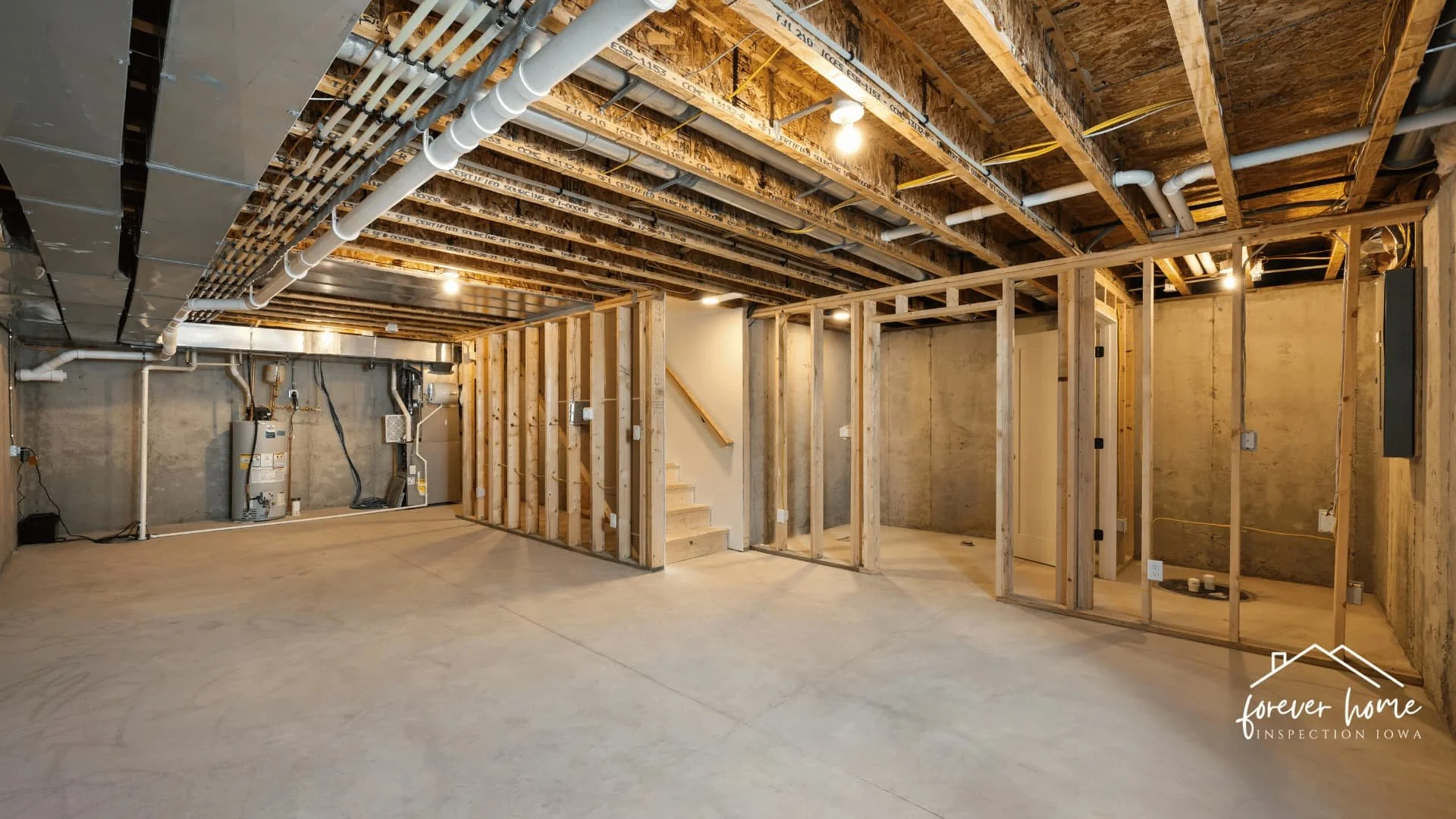
Johnston homes often face foundation cracking due to clay soil. Heavy clay expands when wet and contracts when dry, creating lateral pressure on basement walls and causing horizontal or stair-step cracks. Homes built between the late 1990s and mid-2010s in rapidly developed subdivisions are particularly susceptible because site preparation and backfill practices varied by builder. Basement seepage, efflorescence on block walls, and driveway or sidewalk settlement are all downstream effects of the same soil behavior.
Johnston homes often face issues from the freeze-thaw cycle. Iowa winters bring repeated expansion and contraction of moisture in concrete, mortar, and roofing materials. The results show up as settlement cracks in driveways and foundations, nail pops in drywall (especially during the first two winters after construction), roof wear at valleys and eaves, and ice-dam-related moisture staining where attic ventilation or insulation is inadequate.
Johnston is in EPA Radon Zone 1 for radon risk, the highest-risk classification. High radon levels are a concern in Iowa properties, requiring specialized testing. According to state data, 71.6% of Iowa homes exceed the 4.0 pCi/L radon action level. That number makes radon testing a near-universal recommendation for every transaction in the Johnston market. A 48-hour test is required for accurate radon measurement; short-term grab samples are less reliable because ventilation, weather, and occupant behavior can skew readings.
The age of many Johnston houses means that roofs (typical 20- to 25-year shingle life), furnaces (15 to 20 years), air conditioners (12 to 15 years), and water heaters (8 to 12 years) are often at or near the end of their expected service lives. Inspectors document the estimated age and condition of these systems so buyers can plan replacement budgets rather than face surprise failures.
Older acreages near the Des Moines River valley present a different set of challenges. Private wells require water quality testing. Septic systems need separate evaluation by a licensed installer. Electrical panels in homes from the 1960s and 1970s may contain Federal Pacific or Zinsco breakers, both of which carry documented failure rates. Buyers considering these properties should budget for additional specialty evaluations beyond the standard inspection scope.
Common Issues Found During Johnston Home Inspections
Inspectors in the Johnston area document a recurring set of defect categories. Each one ties back to local soil, climate, or building practices.
Foundation cracks and wall movement. Horizontal cracks in poured concrete or stair-step cracks in block walls are the most consequential findings. In Johnston's clay soils, even homes on flat lots can develop lateral pressure damage after a cycle of wet springs and dry summers. Minor cracks (hairline, less than 1/8 inch) are usually cosmetic. Cracks wider than 1/4 inch, or those with visible displacement, warrant structural evaluation.
Basement moisture. Efflorescence (white mineral deposits), damp spots, and active water staining along foundation walls are common where grading directs water toward the house rather than away from it. Inspectors pay particular attention to sump pump operation, discharge lines, and backup systems because of the local water table and heavy rain events in central Iowa.
Roof wear and flashing failures. Shingle roofs in Johnston degrade under UV exposure, hail, and freeze-thaw stress. Missing or damaged flashing at roof-to-wall transitions, chimneys, and valleys is a frequent finding. Homes with original roofing from the early 2000s are now overdue for replacement.
Attic and insulation deficiencies. Inadequate attic ventilation (blocked soffit vents, missing ridge vents) traps moisture and accelerates sheathing rot. Settled or missing insulation reduces energy performance and contributes to ice-dam formation in winter.
Common issues include nail pops and grading problems. In new-construction and recently built homes, inspectors still find improper grading away from the foundation, missing kick-out flashing at roof-to-wall junctions, incomplete attic insulation coverage, and reversed or missing GFCI and AFCI protection at outlets.
Safety and regulation-related concerns that frequently appear in reports include missing handrails on interior or exterior steps, smoke and carbon monoxide detectors not installed to current standards, and trip hazards at walkways or garage thresholds. These items often cost little to correct but carry real liability if left unaddressed.

How Local Knowledge Benefits Johnston Homeowners
A home inspector who routinely works in Johnston can understand local subdivision layouts, common builder practices from different eras, and city permitting norms. Homes built in the early 2000s differ from post-2015 construction in insulation standards, electrical protection requirements, and roofing materials. An inspector who has seen hundreds of properties in the area recognizes these differences on sight.
This experience helps inspectors spot patterns quickly. Recurring attic condensation problems in certain floor-plan styles, grading issues on sloped lots near NW 62nd Avenue or Merle Hay Road, and drainage pooling in cul-de-sac lots are all examples of issues that an inspector with local mileage identifies faster than someone working the area for the first time.
Inspectors familiar with Johnston can also offer realistic, locally grounded context on typical repair costs, which contractors or trades handle specific work, and which issues are urgent versus items for long-term maintenance planning. When you find an inspector to evaluate your property, ask about their recent experience in Johnston and the broader Des Moines metro to confirm they know the area's housing stock.
Choosing and Scheduling a Home Inspector Johnston, iowa
Selecting the right inspector in Johnston, Iowa, directly affects how well you understand your property and how effectively you can negotiate during a transaction. Below are the qualifications and steps to consider.
Credentials and insurance. Inspectors typically maintain credentials from national organizations like InterNACHI or ASHI. Iowa does not mandate a specific state license for general home inspectors, but Iowa law requires inspectors to meet specific training measures under the Home Inspection Accountability Act. Quality inspectors complete ongoing continuing education and rigorous exams to stay current with building regulations and inspection standards.
Home inspectors should carry both general liability insurance and Errors and Omissions insurance. Iowa Code Section 558A.4A sets minimums at $100,000 per occurrence and $500,000 aggregate, with a deductible no greater than $2,500. Ask any inspector you're considering whether they meet these thresholds.
Sample reports. Before hiring, ask to review a sample report from a similar Johnston property. Confirm that reports are easy to read, include clear photos, and provide practical recommendations rather than only technical jargon.
Reviews and referrals. Check online reviews and testimonials from Johnston clients. Focus on comments about communication, thoroughness, and turnaround time for reports. You can also search the InterNACHI directory for certified inspectors near Johnston.
Timing. Buyers typically schedule a home inspection within the first few days of going under contract. New-construction owners in Johnston usually schedule an 11-month warranty inspection around month 10 to leave time for repairs before the one-year mark. In busy seasons (spring and early summer in Iowa), inspectors' calendars fill quickly, so planning ahead matters.
Many inspectors offer online booking. You can also contact an inspector by phone during business hours, Monday through Friday, to discuss specific concerns like radon testing or sewer scopes. Some inspectors accept a message through their website and respond within a few hours.
Cost Expectations and Value of Home Inspections
A typical single-family home inspection in Johnston falls in the range of $300 to $600, depending on square footage, age, and complexity. Homes over 3,500 square feet or multi-family properties cost more.
Radon testing, sewer scope inspections, and fungus testing are priced as add-ons. In the Johnston metro, typical fees run about $100 for radon testing, $125 for fungus inspection, and $175 for a sewer scope camera inspection. Some inspectors bundle these services at a discount when scheduled alongside a full inspection.
The cost of a thorough inspection is small relative to the potential expense of undiscovered foundation movement, sewer line failure, or elevated radon requiring mitigation. Ask for a clear, itemized quote upfront and confirm what is and is not included to avoid surprises on inspection day.
Preparing Your Johnston Home for Inspection
A well-prepared home lets the inspector focus on evaluation rather than moving furniture to find the electrical panel. Here is a concise checklist:
Unlock all doors, including those to utility rooms, attics, crawlspaces, and outbuildings.
Clear access to electrical panels, furnaces, water heaters, and sump pumps. Move stored items away from foundation walls.
Test smoke and carbon monoxide detectors. Replace furnace filters.
Fix obvious minor issues: burned-out bulbs, stuck windows, running toilets. These trivial notations consume report space without adding value.
Secure or remove pets. Disarm alarm systems or leave clear instructions and codes for the inspector.
In winter, clear snow and ice from roof edges, walkways, and around the foundation perimeter where possible.
Homes that are prepared for access allow inspectors to spend more time on detailed evaluation and documentation, which produces a better report for the client.

Home Inspectors Serving Iowa
Forever Home Inspection Iowa is a local, certified, and insured company emphasizing ethics and client care. Built on love and loyalty, we ensure every inspection is thoroughly done, which accompanies a highly detailed, digital report and warranty.
We specialize in homebuyer inspections. Primarily serving homebuyers and sellers within 60 miles of the Des Moines, Iowa area, we’re flexible and purposeful in meeting client needs.
Our team operates throughout Central Iowa, ensuring quality inspection services in areas all around the Des Moines metro.
We serve both urban and rural Iowa communities, providing top-notch inspections for both residential and commercial properties.
Our services include surrounding communities like Clive, Grimes, and others in the region.
Our commitment to comprehensive, dependable inspections extends throughout Central Iowa, ensuring all residents have access to quality inspection services.
We continually strive to meet the diverse needs of Iowan homebuyers and sellers, maintaining excellence in home inspections and helping our fellow citizens across Central Iowa make informed real estate decisions!
How to Schedule Your Home Inspection
Scheduling a home inspection with Forever Home Inspection Iowa is simple and stress-free. Book your inspection online or with a quick phone call— our responsive team makes scheduling easy, a quality our clients and real estate agents consistently appreciate.
We’re not only experts in our field, but qualifying inspections also include a free warranty, adding an extra layer of confidence to your homebuying journey. We’re confident you’ll love partnering with us.
Once scheduled, you’ll receive an email with access to your custom inspection portal, where you can review important documents and select a secure payment option. Inspections typically take two to four hours, depending on the size and condition of the property. Every step of the process is designed with your convenience and peace in mind!
Reviews From Happy Homebuyers
Frequently Asked Questions About Home Inspections in Johnston, Iowa
These FAQs address practical details that often come up but may not have been covered fully above.
How long does a typical home inspection take in Johnston?
Most single-family home inspections in Johnston take about 1.5 to 3 hours. Size, age, and condition of the property all affect duration. If radon testing (which requires a 48-hour monitoring period) or a sewer scope is performed at the same visit, the inspector spends an additional 15 to 30 minutes on setup and explanation. Larger homes, acreages, and multi-family properties may require additional time. Radon Testing of Iowa uses Femto-Tech equipment for accuracy, and results are typically included in the final report once the monitoring period ends.
Do I really need radon testing if the home already has a mitigation system?
Yes. Radon testing is still recommended in Johnston even if a mitigation system is present. The test confirms that the system is working correctly and that indoor radon levels are below the 4.0 pCi/L action level. Mitigation fans fail, pipe seals degrade, and home modifications (finishing a basement, adding a sump pump) can compromise system effectiveness. Since 71.6% of Iowa homes test above the 4.0 pCi/L radon action level, periodic re-testing is a low-cost safeguard against a measurable health risk.
Can a home "fail" a home inspection in Johnston?
Home inspections are not pass/fail. The inspector documents observed conditions, safety concerns, and material defects, but does not approve or disapprove a house. Buyers and their agents use the report to negotiate repairs, request credits, or, if allowed by the purchase agreement, walk away from the transaction. The report is a decision-making tool, not a verdict.
Should I attend the home inspection, and what should I bring?
Buyers should attend at least the wrap-up portion (the final 30 to 60 minutes) to ask questions and see key issues firsthand. Bring a notebook or digital device for notes, a copy of the purchase agreement or seller's disclosure, and a list of any specific concerns you want the inspector to address. Sellers benefit from attending briefly as well, because they can point out recent repairs or known conditions that provide context.
How early should I schedule a Johnston home inspection once my offer is accepted?
Schedule as soon as your offer is accepted, ideally within 24 to 48 hours. This guarantees inspector availability and leaves enough time within the inspection contingency period for the inspection itself, report review, and any follow-up evaluations. In busy spring and early summer months, Johnston inspectors' calendars can fill a week or more in advance. If you know you are close to making an offer, contact inspectors ahead of time so you can lock in a date quickly once the contract is signed.
Want More?
Check out other posts we’ve written.