
Home Inspection and Radon Testing: What Buyers Need to Know

When you’re buying a home, the inspection period is your opportunity to uncover hidden issues that could affect your health and your investment. One of the most critical—and most frequently overlooked—concerns is radon gas, a naturally occurring radioactive gas that you cannot see, smell, or taste. This guide walks you through everything you need to know about combining home inspection and radon testing to make informed decisions in 2026.
Key Takeaways
Radon testing is one of the most important add-ons to a standard home inspection in 2026, especially during real estate transactions where timing matters.
Radon is the second leading cause of lung cancer in the U.S. after smoking, and testing is the only way to detect it since the gas is colorless and odorless.
Most home inspections do not automatically include radon testing—buyers must specifically request it as an add-on service.
The Environmental Protection Agency (EPA) recommends mitigation at 4.0 pCi/L or higher, and radon mitigation systems typically cost $800–$1,500 while reducing levels by up to 99%.
Homeowners should retest every two years or after major renovations, even if a previous test showed low levels or a mitigation system is already installed.
What Is Radon and Why It Matters for Home Inspections
Radon naturally occurs when a radioactive gas is produced by decaying uranium and other radioactive elements in soil, rock, and certain building materials. It exists in every U.S. state, making it impossible to assume any property is safe without testing.
Because radon is invisible, odorless, and tasteless, the only way to know your home’s radon levels is through formal testing as part of or alongside a home inspection. The EPA and CDC recognize radon as the second leading cause of lung cancer in the United States, responsible for an estimated 21,000 deaths annually.
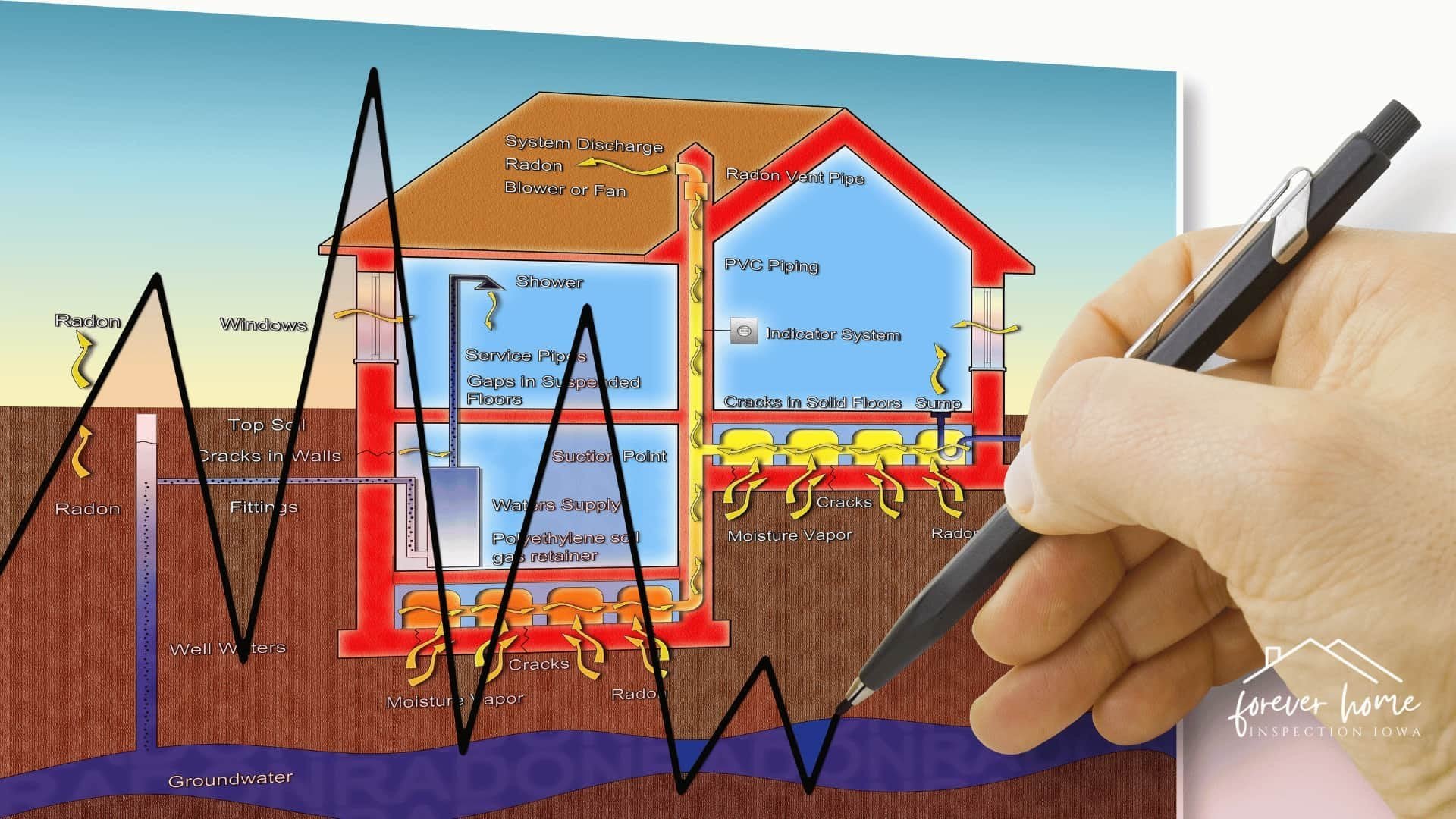
Radon can affect homes built on slabs, basements, and crawl spaces—both new construction and older houses. Visual inspection alone cannot rule out a radon problem. The gas seeps through:
Foundation cracks and shrinkage gaps
Spaces around plumbing penetrations
Sump pits and floor drains
Exposed soil in crawl spaces
Radon can also enter homes through tiny cracks, gaps, and holes in the foundation, as well as through building materials like granite, brick, and concrete that may contain radioactive elements.
How Radon Enters a Home and Which Homes Are at Higher Risk
While any home can have elevated levels of radon, local geology, construction style, and maintenance all influence risk. Environmental factors like weather and temperature changes can cause shifts in soil that allow radon to form and enter living spaces. The foundation type—such as dirt floors, crawl spaces, or basements—can significantly influence the likelihood of radon infiltration, with certain foundation constructions, especially older or damaged ones, increasing the risk.
Common radon entry points in a home vary in risk level but often originate from structural gaps and exposed ground areas. High-risk entry points include shrinkage cracks in basement slabs and dirt-floor or vented crawl spaces, both of which allow radon gas to seep directly from the soil into living spaces. Areas with moderate to high risk include gaps around utility lines, where small openings can provide a pathway for radon to enter. Additionally, floor drains and sump pump basins—including the sump pumps themselves—pose a moderate risk, as they can also serve as conduits for radon infiltration if not properly sealed or maintained.
Certain regions historically show higher average radon levels, including parts of the Appalachian Mountains, Upper Midwest, and Rocky Mountain states. Current EPA radon zone maps can help identify regional risk. However, radon levels can vary widely even between neighboring homes, making individual testing essential.
Older homes with unsealed foundations, fieldstone walls, or original crawl spaces are often more vulnerable. However, new, tightly sealed energy-efficient homes can also trap radon because reduced natural ventilation allows the gas to accumulate in indoor air.
What a Standard Home Inspection Covers (and What It Misses)
A typical pre-purchase home inspection in 2026 helps buyers understand a property’s overall condition through visual, non-invasive evaluation. During a standard home inspection process, inspectors commonly evaluate:
Roof coverings and attic insulation
Exterior grading and drainage
Foundation and structure
HVAC system components
Electrical panels and visible wiring
Plumbing fixtures and supply lines
Interior finishes and windows
However, general inspections are visual and non-invasive. Home inspectors do not open walls, remove finishes, or perform destructive testing. Specialized environmental hazards—including radon, spores, lead-based paint, and well-water contaminants—fall outside the base inspection fee.
Radon testing is generally a separate service and must be requested. Buyers should confirm in writing whether radon is included in their inspection agreement or needs scheduling as an additional line item with an additional fee.
The Importance of Adding Radon Testing to Your Home Inspection
The inspection contingency period—typically 7–15 days after an offer is accepted—is the ideal time to get a radon test or get a radon inspection. Combining radon testing with your home inspection minimizes disruption and guarantees test conditions are properly controlled.
Radon test results can directly influence negotiations during a real estate transaction:
Request the seller install a radon mitigation system before closing
Negotiate a price reduction or credit at closing
Require levels be brought below 4.0 pCi/L before transfer
High radon readings are a common reason for renegotiation with home sellers, often resulting in the installation of a radon mitigation system.
In many states, radon disclosure or testing is encouraged or required during transactions. Even without mandates, ordering a radon inspection proactively is a low-cost way to protect long-term health and your investment.
Types of Radon Testing Used During Home Inspections
There are a few different ways inspectors and homeowners can test for radon, including short-term and long-term tests, as well as active (powered) and passive (non-powered) devices. Home tests are available for homeowners to determine if a property has elevated radon levels. Real estate transactions most commonly rely on short-term testing—often 48 hours—using a continuous radon monitor placed by a certified radon testing specialist.
The radon test device is typically placed in the lowest livable level of the home, away from exterior walls, drafts, and high-traffic areas. Continuous radon monitors are used to measure a home's radon levels over a specific period. Test protocols in 2026 still follow EPA and state health department guidance regarding placement, closed-house conditions, and minimum duration.
Professional Active Radon Testing (Continuous Monitors)
Active tests are the preferred method in time-sensitive inspections due to fast, detailed results. Continuous radon monitors are electronic devices that record radon levels hourly over a 48–96 hour period, along with tamper and environmental data.
Professional radon inspectors set up the device at the inspection appointment, verify closed-house conditions, and return after the test period to retrieve and analyze data. These monitors reduce tampering risks by tracking:
Device movement
Power interruptions
Sudden environmental changes
Results are usually available the same day the monitor is picked up, making this method ideal for meeting contract deadlines.
Passive Radon Tests (Charcoal and Alpha-Track Kits)
Passive test kits are often used by homeowners for follow-up testing but are less common for main inspection contingencies in competitive markets.
Charcoal canisters: Placed for 2–7 days, sealed, and mailed to a lab with results returned within a few business days.
Alpha particle tracking tests: Remain in place for 90 days to a year, providing average radon concentration across multiple seasons using long-term test methodology.
Passive tests can deliver accurate results when protocols are followed but may be more vulnerable to user error and delayed lab processing. Radon test kits from home improvement stores work for interim monitoring between professional tests.
Test Conditions, Timing, and How Long Radon Testing Takes
Reliable short-term radon tests require “closed-house conditions” throughout the testing period:
Windows and exterior doors closed for at least 12 hours before device activation
Doors remain closed throughout the 48-hour test (except brief normal entry/exit)
No whole-house fans, window AC units bringing in outdoor air, or powerful exhaust fans
Most real estate radon tests run 48 hours, though some protocols allow 72–96 hours for increased confidence. Including device pickup and reporting, buyers typically receive a detailed report within 2–3 days of starting—well within typical inspection deadlines.
Understanding Radon Test Results From a Home Inspection
Radon levels are measured in picocuries per liter (pCi/L), and understanding these values is important for both buyers and sellers. A result below 2.0 pCi/L is considered low, meaning no immediate action is needed. Levels between 2.0 and 3.9 pCi/L fall into a moderate range, where it is generally wise to consider retesting or ongoing monitoring. When radon levels reach 4.0 pCi/L or higher, they are considered elevated, and the U.S. Environmental Protection Agency recommends taking action to mitigate the issue to reduce potential health risks.
A single short-term test slightly above 4.0 pCi/L may trigger recommendations for immediate mitigation or a follow-up confirmatory test, depending on local practice and contract language.
Practical example: If test results show 6.3 pCi/L in a finished basement, the EPA recommends the buyer negotiate with the seller to have a radon mitigation system installed with the goal of bringing levels below 4.0 pCi/L. A result of 1.8 pCi/L on the main floor would require no immediate action.
What Happens if the Home Inspection Finds High Radon?
High radon is common and fixable. Elevated radon levels do not have to be a deal-breaker for purchasing a home. Approximately one in 15 U.S. homes tests at elevated levels.
When levels exceed 4.0 pCi/L, buyers typically have several options:
Request the seller install a mitigation system installed before closing
Negotiate a price reduction or closing credit
Request additional confirmatory testing
In higher-radon states, it has become standard by 2026 for sellers to agree to mitigation or credits during inspection negotiations. The purchase contract and local customs determine payment responsibility and completion timelines.
Once mitigation is complete, a post-mitigation test confirms levels have dropped below the agreed threshold—often before closing or shortly after move-in.
Radon Mitigation Options and Costs
Mitigation focuses on preventing radon from entering the living space and safely venting it above the roofline. A radon mitigation system is the most effective way to reduce radon levels in a home, typically using pipes and fans to vent the gas from beneath the foundation before it can enter the living space. The most common system for homes with basements or slabs is active sub-slab depressurization, using:
PVC piping inserted through the slab into the gravel layer
A continuously running fan to exhaust radon outdoors
Vent pipe routed through interior or exterior walls to exit above the roof
For crawl space homes, sub-membrane depressurization involves installing a sealed plastic membrane over soil connected to a vent pipe and fan.
Cost range in 2026: Most residential systems run $800–$1,500, with larger or complex homes sometimes exceeding $2,000. The cost is influenced by the home's size, floor plan, and foundation type. Plan for fan replacement every 8–12 years depending on manufacturer specifications.
Simple Steps to Help Reduce Radon Levels
DIY measures cannot replace a full mitigation system when levels are high, but they can help stabilize moderately elevated readings:
Seal obvious cracks and gaps in basement floors and foundation walls with polyurethane caulk
Improve ventilation using balanced or heat-recovery ventilation systems
When building or remodeling, request radon resistant techniques including pre-installed vent piping
Follow any structural or HVAC changes with repeat testing to confirm effectiveness
Health Risks of Radon Exposure
Long-term radon exposure is directly linked to lung cancer. Radon is the leading cause of lung cancer among non-smokers in the United States—a cancer causing gas that claims thousands of lives annually.
Risk increases with both concentration and duration of exposure. Smokers exposed to elevated radon levels face significantly higher combined risk than non-smokers. Symptoms of radon-related lung cancer typically do not appear for many years, which is why prevention and early testing are emphasized.
Children may be more susceptible because their lungs are still developing and they often spend more time at floor level where radon can concentrate. Anyone who has lived in a high-radon home for many years—especially smokers—should discuss lung cancer screening options with their healthcare provider.
How Often to Test and When to Retest for Radon
Radon levels can change over time due to shifting soils, seasonal patterns, and home renovations. A single test is not valid forever.
Retest recommendations:
At least every two years for all homes
After finishing a basement or making significant changes to foundation areas
After changing HVAC systems or significantly altering ventilation
Homes with existing mitigation systems should monitor radon levels regularly
Keep written records of all radon tests and mitigation work—these documents provide value for future buyers and appraisers. Inexpensive DIY kits work for interim checks between professional tests when instructions are followed carefully.

Home Inspectors Serving Iowa
Forever Home Inspection Iowa is a local, certified, and insured company emphasizing ethics and client care. Built on love and loyalty, we ensure every inspection is thoroughly done, which accompanies a highly detailed, digital report and warranty.
We specialize in homebuyer inspections. Primarily serving homebuyers and sellers within 60 miles of the Des Moines, Iowa area, we’re flexible and purposeful in meeting client needs.
Our team operates throughout Central Iowa, ensuring quality inspection services in areas all around the Des Moines metro.
We serve both urban and rural Iowa communities, providing top-notch inspections for both residential and commercial properties.
Our services include surrounding communities like Norwalk, and Mitchellville, and others in the region.
Our commitment to comprehensive, dependable inspections extends throughout Central Iowa, ensuring all residents have access to quality inspection services.
We continually strive to meet the diverse needs of Iowan homebuyers and sellers, maintaining excellence in home inspections and helping our fellow citizens across Central Iowa make informed real estate decisions!
How to Schedule Your Home Inspection
Scheduling a home inspection with Forever Home Inspection Iowa is simple and stress-free. Book your inspection online or with a quick phone call—our responsive team makes scheduling easy, a quality our clients and real estate agents consistently appreciate.
We’re not only experts in our field, but qualifying inspections also include a free warranty, adding an extra layer of confidence to your homebuying journey. We’re confident you’ll love partnering with us.
Once scheduled, you’ll receive an email with access to your custom inspection portal, where you can review important documents and complete payment securely. Inspections typically take two to four hours, depending on the size and condition of the property. Every step of the process is designed with your convenience— and peace of mind —in mind!
Reviews From Happy Homebuyers
FAQ: Home Inspection and Radon Testing
Is radon testing automatically included with every home inspection?
In most U.S. markets, radon testing is an optional add-on service—not part of the base home inspection fee—due to separate radon testing license requirements and specialized equipment. Ask your inspector in advance whether they hold proper credentials, what type of device they use, and cost expectations. If your primary inspector isn’t certified, they may coordinate with a licensed company or licensed radon testing specialist to perform testing during the same inspection window.
Should I skip buying a house if it has high radon levels?
High radon levels alone usually should not disqualify an otherwise suitable home. Modern mitigation systems are highly effective and relatively affordable. Focus on ensuring a clear written plan for mitigation: who pays, what system type, and when post-mitigation testing occurs. Some buyers actually prefer homes with existing, properly functioning mitigation systems since the radon problem has already been identified and addressed.
Can opening windows during the inspection help me “pass” a radon test?
Intentionally opening windows or altering ventilation to influence results violates testing protocols and produces misleading, unsafe readings. Professional continuous radon monitors record pressure, temperature, and motion changes that flag suspected tampering in the final report. The goal of testing is understanding actual radon exposure so it can be managed—not “passing” an artificial test. Honest results protect both current and future occupants.
Is a two-day radon test during the inspection really accurate enough?
A properly conducted 48-hour test using a calibrated continuous radon monitor is widely accepted in real estate transactions and by state health agencies for decision-making. While long-term tests offer more complete seasonal averages, short term tests provide reliable snapshots under controlled conditions. Homeowners in higher risk regions should follow up borderline results with a long term test after move-in to refine understanding of yearly exposure.
Will a radon mitigation system affect my home’s appearance or energy bills?
Most systems route PVC vent pipes through the side of the house or interior chases to exit above the roof, with fans mounting on exteriors or in attics. Modern fans are quiet and draw minimal electricity, adding only modest amounts to monthly utility costs. Discuss routing options with a certified radon contractor to balance effectiveness, aesthetics, and future maintenance access.
Want More?
Check out other posts we’ve written.